When Nuclear Diplomacy Becomes Energy Blackmail
Vania Bunga
22 Mei 2026
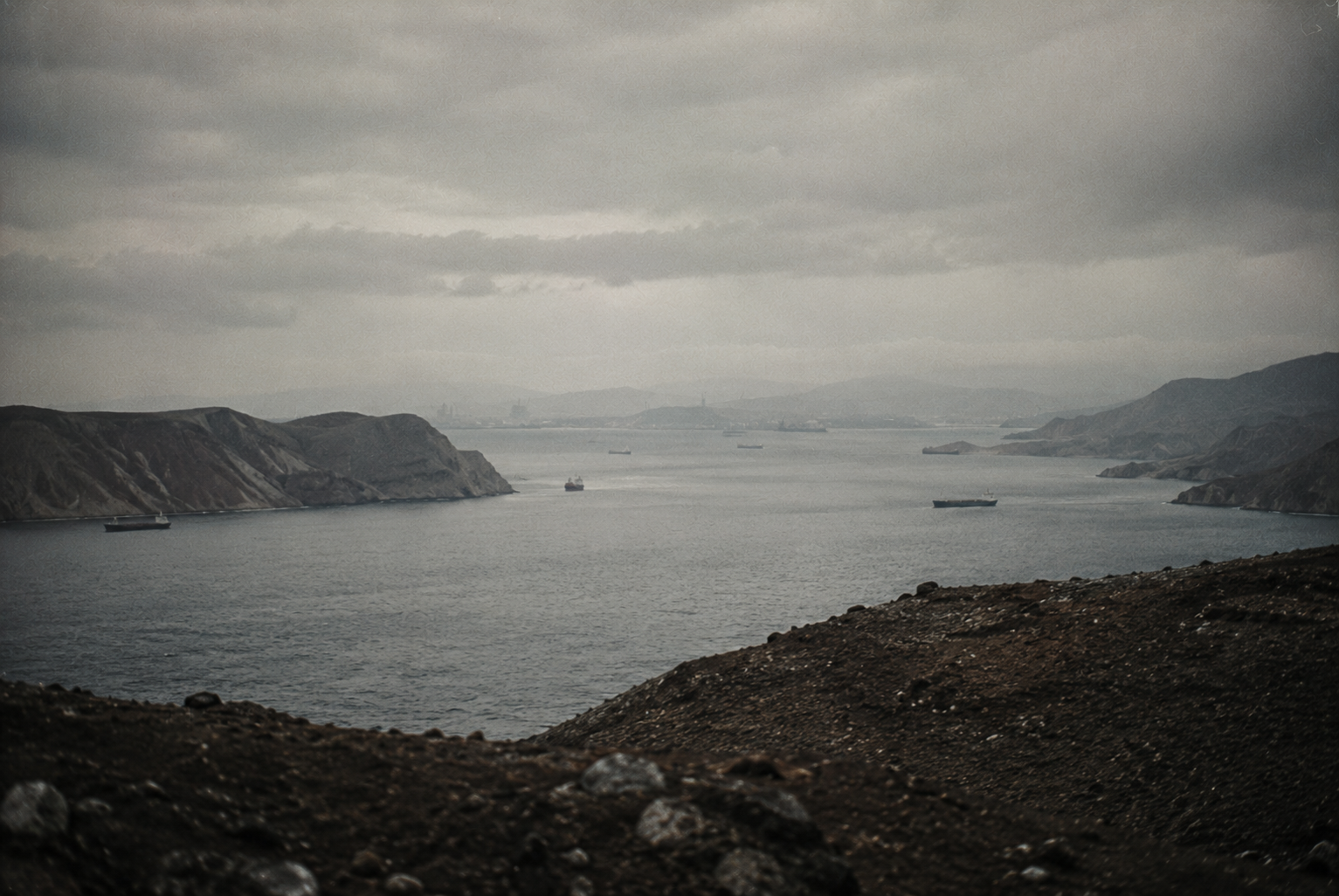
When tensions rise between the United States and Iran, the entire world often pays attention to nuclear weapons. But today, the issues have been more complicated now, and in many ways, they are affection more. It’s not just about nuclear power anymore, but it’s also about who controls the system that keep the world economy running smoothly. The Strait of Hormuz is a narrow sea routes that carries a large part of the world’s oil supply (U.S. Energy Information Administration, 2023). The Strait is at the center of the current shift. When situations get tense in this area, it has effects all over the world, including on markets, economies, and everyday life.
In early 2026, tension around the Strait of Hormuz increased, causing global oil prices to rise from $70 per barrel to more than $80 and at their highest, prices reached over $100 and even close to $120 (Reuters, 2026). These changes aren’t just market fluctuations but they create direct pressure on the world’s economy. For Indonesia, every $1 spike in oil prices adds about IDR 6.7-6.8 trillion to the state budget (Institute for Essential Services Reform, 2025). By 2026, total energy subsidies are expected to be more than IDR 210 trillion (Kementrian Keuangan, 2026). Indonesia is a big massive net oil importer, which means it is very vulnerable to changes in global oil prices. This makes geopolitical tension in other parts of the world a direct concern for Indonesia. Consequently, whatever appears to be a regional fight quickly turns into global economic dilemma that affects government budgets, market stability, and the cost of living. This shows a bigger change in how countries interact with each other when power is no longer just about having a strong military, but also about having control over important economic systems.
A broader macroeconomic trend also shows how external shocks are becoming harder for emerging economies to absorb. Indonesia’s inflation rate peaked at around 6% in 2022 due to global food and energy pressures, before easing to around 2.3% in 2024 and remaining relatively stable through 2025 (OECD, 2024). However, the 2026 escalation in the Middle East has renewed concerns over imported inflation, particularly through energy and transportation costs. Reuters polling in April 2026 showed economists revising Indonesia’s inflation outlook upward toward 3%, while warning that further subsidy adjustments could push inflation closer to 5% (Reuters, 2026). This suggests that even when domestic inflation appears under control, Indonesia’s price stability remains highly exposed to geopolitical tensions and global commodity volatility.
For a long time, world saw nuclear weapons as the most powerful thing in international relations. But what we’re seeing now seems to be more complicated. Iran is not abandoning nuclear leverage, but it is clearly going beyond it. Instead of just using escalation, it’s using geography to its advantage, especially its location near the Strait of Hormuz. This change isn’t just a conceptualization but it’s already happening. Since 2026, when tension spiked access through the strait has become more and more limited. The United States has responded by sending more ships to the area and trying to control Iranian shipping routes. At the worst of the disruption, shipping traffic dropped sharply, from about 125 to 140 ships per day to less than 10 (Reuters, 2026). Which on its own shows how quickly pressure can build up without a full shutdown. This becomes essential because the Strait of Hormuz isn’t just another route. It moves about 17 to 20 million barrels of oil every day, which is about one-fifth of the world’s supply (U.S. Energy Information Administration, 2023). So even a small amount of disruption sends shockwaves through markets all over the world. Oil prices went over $100 per barrel in 2026 and at the times they went over $120 (Reuters, 2026). This show how sensitive the system is to instability in this one place.
It’s interesting that Iran doesn’t have to completely close the strait to make difference cause the threat is enough on its own. More military activity, uncertainty about shipping routes, and greater sense of risk are already making insurance more expensive, deliveries take longer, and the global supply is tighter. Even before anything goes wrong, the pressure works. Recent situations have made this even clearer. Limited flows have kept a lot of oil off the market, which has kept prices high over time. If tension stay high, some forecasts say that energy process around the world could go up by 20 to 25 percent in 2026 (World Bank, 2026). In that way, the effect isn’t just short term but its long lasting and affects the whole system. That brings us to the bigger point which is today, power isn’t just about having a strong military. It’s about having power over systems, like flows of trade, energy, and money. Being able to break that system, even for a short time, has become a powerful way to get people to do what you want. In a lot ways, it’s having just as big of an effect as other ways of deterring people.
What was once considered as a system of mutual benefit is now being used as an instrument of leverage. countries are no longer just participating in global interdependence, they are shaping and exploring it. Regarding the United States and Iran, it means turning economic ties into strategies tools. Energy flows are one of good illustration is. Iran’s geography next to the Strait of Hurmuz gives it the ability to influence the world’s oil supply, not by controlling it, but by making it seem less dependable. At the same time, the United States uses its dominance of global finance, especially through the US dollar and international payments systems, to constrain Iran’s ability to trade and access capital. This dynamic is powerful because it does not depend on direct confrontation. Instead, it operates through the system countries rely on daily. Oil shipment, financial deals, insurance markets and even investor confidence are all put under pressure. And this is where it gets real.
People would think this is sort of “economic conflict” doesn’t seem like a real war but it’s felt like one. In Indonesia, expensive oil means expensive fuel, which impacts transportation, food distribution and daily costs. A small increase in global prices can quietly eat away at purchasing power. For workers it is the rising cost of living. That means smaller margins for small business. Even those far from the conflict are still caught up in it via prices, wages and uncertainty. Even uncertain becomes a tool. When a shortage is priced in, prices will rise before the shortage actually occurs. This part of a large change in how globalization works. Interdependence is no longer just a matter of cooperation but also one of vulnerability. As the system becomes more connected, there are more chances to use those connections as leverage. in this sense globalization doesn’t diminish conflict. It changes it. Power is not exercised merely but brute force, but by the ability to influence the flows on which other depend. Interdependence becomes a strategic battleground that goes all the way down to everyday life.
The situation get even more complicated because the effect is not confined to the Middle East. In today’s globalization system, instability in one region can quickly spread to markets, trade, and the daily economic life of the entire world. Just the threat of blocked shipping routes, delayed oil deliveries or further escalation is enough to cause panic in energy markets. Oil prices soared to over $100 per barrel at times of heightened tension in 2026, and shipping and insurance costs in the Gulf region also increased sharply as companies sought to avoid risk (Reuters, 2026). This pressure is quickly transmitted because of the deep integration of the global economy. Higher energy prices push up transportation and production costs. Geopolitical crises also tend to lead investor to shift their money into safer markets, putting added pressure on emerging economies. In many ways, the uncertainty itself has become part of the disruption. This is why modern conflict feels different which is effect felt even in countries far away from the conflict.
The financial impact is also becoming more visible in currency and capital markets. Throughout 2025–2026, the rupiah remained under pressure as investors moved toward safer assets amid global uncertainty. Bank Indonesia repeatedly prioritized rupiah stabilization over aggressive monetary easing, keeping interest rates relatively tight despite slowing global growth (Reuters, 2026). This reflects a common challenge for emerging economies during geopolitical crises: central banks are often forced to balance currency stability, inflation control, and domestic growth at the same time. In Indonesia’s case, external instability increasingly limits policy flexibility at home.
These effects are not distant or theoretical for Indonesia. They show up directly in the economic situation of the country and in the life of the people in everyday life. Indonesia remains heavily dependent on imported oil, consuming about 1.6 million barrels a day but only producing some 600,000 at the domestic level. That gap leaves the country very vulnerable to global price shocks. When oil prices go up, the pressure is immediately on the state budget, as the government has to spend more money on fuel and energy subsidies. Indonesia is projected to spend more than IDR 210 trillion on energy subsidies in 2026 (Kementerian Keuangan Republik Indonesia, 2026).
This crisis shows a more crucial contradiction in Indonesia’s own development path. On the one hand, Indonesia is actively pushing energy transition and green economic policies, from renewable energy target to carbon market initiatives. But in the same time, the country is still heavily reliant on imported fossil fuels to keep its economy going. This contradiction is far more visible in global crises such as when the price of oil rises and supply become uncertain, the urgency of switching to renewable energy is even more apparent. But also, economic pressure in the short term tend to keep government dependent on fossil fuels, because they are still seen to be the fastest way to keep stability. Indonesia is an suitable case in context for this dilemma. Fossil fuels still account for over 50% of Indonesia’s energy consumption, and oil imports are still high, despite the government’s target to increase the share of renewables in the country’s energy mix to about 23% (International Energy Agency, 2025). Higher world oil prices also led the government to maintain sizeable energy subsidies to protect households from steep price increases. The energy transition feels more urgent as global oil markets become more unstable. But at the same time, the urgency of inflation, subsidies and energy demand make it hard to get off fossil fuels fast.
The value of the Strait of Hormuz brings up bigger questions domestically. Indonesia is also close to another important maritime chokepoint which is the Strait of Malacca, one of the world’s busiest shipping lanes. Each year this corridor carries about a quarter of the world’s traded goods and a large share or Asia’s energy imports. The situation in Hormuz show how strategic routes can be used as political leverage in tense times. And if this chokepoints in the Middle East can so quickly affect global markets, it raises questions about how similar dynamics might play out in Southeast Asia in the future. This is particularly important as great power competition in the Indo-Pacific is already intensifying. Sea lanes are strategically important in both the United States and China, both for trade and for security and influence. So strategically waterways are becoming more than economic corridors, they are becoming geopolitical pressure points. For Indonesia, this is a delicate balancing act. The country wants to maintain regional stability and strategic neutrality, but its location also places it strike in the middle of the larger competition among major powers.
What happened between the U.S. and Iran tension shows Indonesia’s position as a middle power in a global system that becoming more unstable and fragmented. Indonesia is heavily affected by disruptions in global markets, but at the same time, it has very little ability to influence how these conflicts unfold. The situation reflects a bigger structural reality, countries like Indonesia are deeply connected to the global economy through trade, energy imports, investment, and financial system. But the connection also creates dependence. When major power competes, middle power often end up dealing with the consequences even when they are not directly involved in the conflict itself. At the same time, Indonesia still has to carefully balance its relationships with bigger powers while trying to maintain its own strategic interests and political independence. That is not always easy in a system where economic stability is still heavily influenced by external forces. In the end, this situation shows that globalization brings both opportunities and risks. Indonesia benefits from being part of the global economy, but it also means the country remains exposed to crises and geopolitical tensions that it cannot fully control.
In many ways, this is the reality of today’s global order. Conflict no longer stays on battlefields. It moves through trade, energy, finance, and uncertainty. And as the world becomes more interconnected, geopolitical tensions will continue to affect not only governments and markets, but also ordinary people trying to navigate rising costs and economic instability in their daily lives.
Referensi
- Bank Indonesia. (2026). Monetary policy report and inflation outlook 2026. https://www.bi.go.id
- Institute for Essential Services Reform. (2025). Indonesia’s energy subsidy outlook and deficit risks amidst oil price volatility. https://iesr.or.id
- International Energy Agency. (2024). Oil market report. https://www.iea.org/reports/oil-market-report
- International Energy Agency. (2025). Indonesia energy outlook and renewable transition analysis. https://www.iea.org
- Kementerian Keuangan Republik Indonesia. (2026). APBN 2026: Energy subsidy and fiscal outlook. https://www.kemenkeu.go.id
- Organisation for Economic Co-operation and Development. (2024). OECD Economic Surveys: Indonesia 2024. https://www.oecd.org/en/publications/oecd-economic-surveys-indonesia-2024_de87555a-en.html
- Organisation for Economic Co-operation and Development. (2025). OECD Economic Outlook: Indonesia. https://www.oecd.org/en/publications/oecd-economic-outlook-volume-2025-issue-1_83363382-en/full-report/indonesia_4c4ce2be.html
- Reuters. (2026, April). Bank Indonesia holds rates amid inflation risks and rupiah pressure. https://www.reuters.com
- Reuters. (2026, April). Oil prices rise amid tensions in the Strait of Hormuz. https://www.reuters.com
- U.S. Energy Information Administration. (2023). World oil transit chokepoints. https://www.eia.gov/international/analysis/special-topics/World_Oil_Transit_Chokepoints
- World Bank. (2026). Global economic prospects and energy market risks. https://www.worldbank.org