Asia at the Center of the Blue Economy Transition: Power, Sustainability, and the Future of Ocean Governance
Vania Bunga
21 April 2026
The future of global ocean economy may be decided in Asian waters. The region’s lively shipping corridors and extensive fishing grounds have transformed it into the core of what is known as the blue economy. A framework that seeks economic growth without damaging marine environments. Nowadays, the marine environment is more than just a background, it takes canter stage in support economic advancement and environmental protection initiatives (Rudolph et al., 2020). More than 80% of the entirety of international trade is transported by sea. The world’s ocean really does keep the globe moving and it’s more than simply ships. Through 2023, the fishing and aquaculture industries produced approximately 223 million tonnes of fish and seafood, valued at almost half a trillion dollars (UNCTAD, 2023). That represents a big part of the global food supply, and it indicates just how reliant we now on the ocean for more than just trade. For this reason, governments and global organizations are pushing the concept of the blue economy harder than ever and trying to find the perfect balance between financial gain and protecting marine life over the long term.
The Asian region zone holds some of the world’s most important maritime routes, such as the Strait of Malacca. Ships crossing through there carry a major share of global energy and commodities. Throughout 2024 exclusively, above 94,000 maritime vessels moved through, carrying almost 25% of worldwide maritime trade and around 24 millions barrels of oil each day (FAO, 2024). The Asian continent additionally dominates global markets in the fields of fishing and aquaculture. The data provided by the Food and Agriculture Organization are significant said that approximately 70% of worldwide aquatic animal production comes from this region, as well as over 90% of aquaculture (EIA, 2024). For billions of people, particularly in Asia, there water sources are vital lifeless.
The Asian continent isn’t only riding the wave of the blue economy but it’s leading it. Countries like China, Indonesia, India, and Vietnam aren’t just big producers cause they provide jobs for roughly 85% of the global fishers and aquaculture workforce (Ballast Market, 2025). Moreover, regional governments are investing heavily in developing fresh ports facilities, maritime infrastructure, and ocean focused industries. The entirety of this provides Asian countries more control in the way the world governs its ocean. As a result, the future of blue economy will largely depend on political, economic, and environmental decision made by Asian waters.
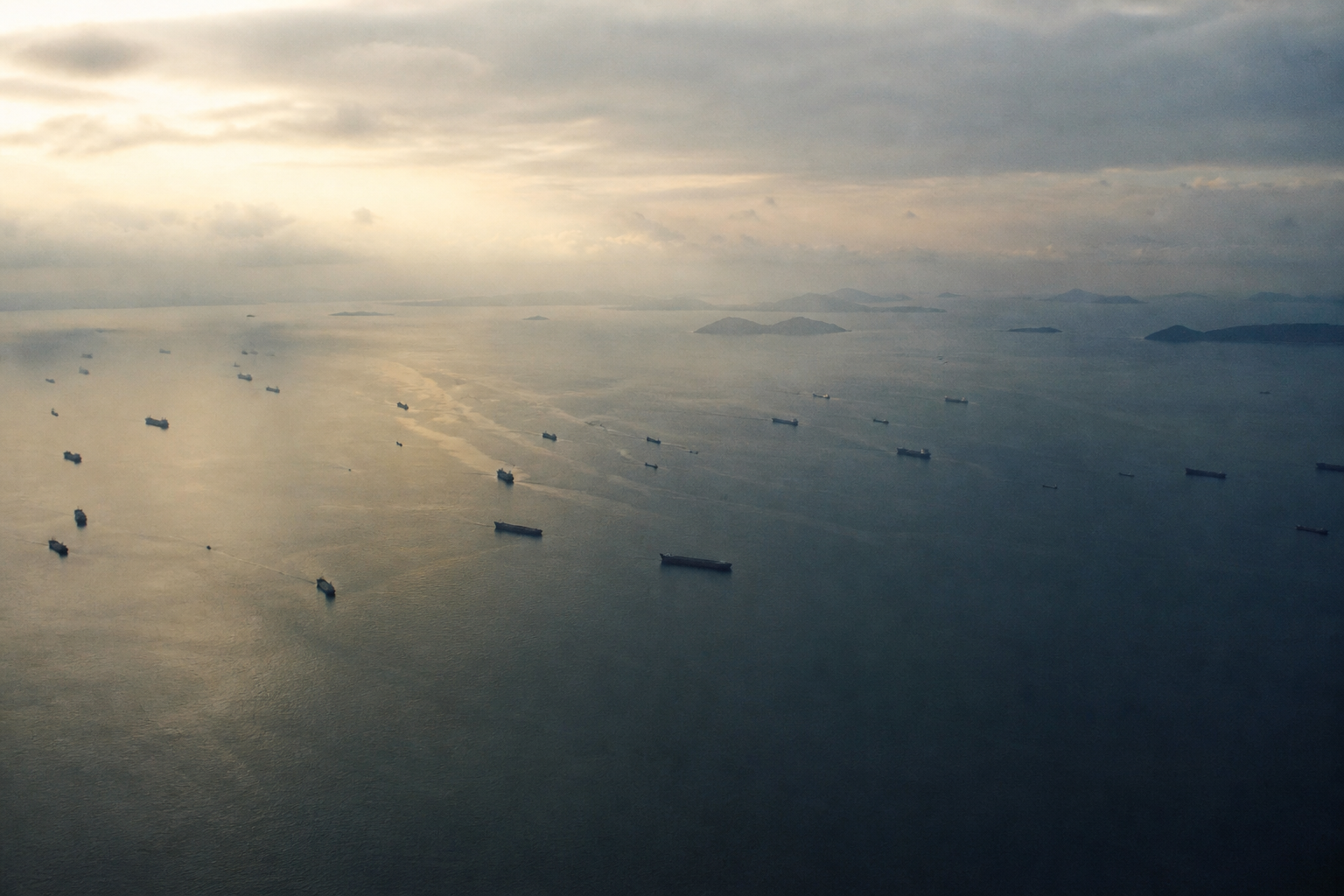
Since the world’s oceans drives the worldwide economy, as well as the Asian region is at the very central of it. Consider the waterways of Asia is several of the most traffic maritime routes which worldwide go straight across this region, especially the Strait of Malacca. It’s a tight corridor, yet it connects the Indian Ocean and the Pacific Ocean, which makes it critically important to maritime trade linking Asia, Europe, and the Middle East. Countries like China, Japan, South Korea, and much Southeast Asia depend on these sea routes to maintain their factories operating smoothly and their shipments moving. If those routes aren’t safe and steady, global supply chain start to become unstable.
Yet, this is because a great deal of global commerce depends on maritime transport, global markets grow uneasy whenever problems arise within Asian maritime zones. In 2024, vessels transported over 12 billions tons of cargo across the seas (UNCTAD, 2024). As result, when difficulties occur such as political deadlock, bad weather, or a dispute it will quickly for freight charges to rise and for cargo to be delayed. It is evident that we have seen shipping costs increase sharply and vessels compelled to use a longer route, leading to overall imbalance (UNCTAD, 2025). It reminds us that Asia goes beyond connecting supply chains but it has considerable control over pricing of goods, fuel supplies, and the state of the world economy. But this is not only about trade. Asia also the world’s key player of seafood production. Asia continent produces about 70% of all aquatic animals and roughly three quarters of global fisheries and aquaculture output around 167 million tonnes (FAO,2024). Especially for seafood farming and Asia region hold an even stronger lead producing more than 90% of the global supply, with China, Indonesia, India, and Vietnam leading the way (FAO, 2024). The fish is far more than just commodity in this region but it’s vital source of protein and jobs. Especially, the way Asian countries manage their fisheries directly shapes food security and economic stability around the world.
The blue economy seems like a boost to sustainable expansion, but sadly the seas around Asia are under pressure. The reason behind it because communities in the region area crave seafood more than ever, and this is putting pressure on fish populations as well as whole ecosystem to their maximum seafood, so it’s no surprise that the pressure on the oceans here is massive (FAO, 2024). Besides that, the situation where fishing regulations frequently go unenforced, illegal and unreported fishing is out of control. The consequences is many coastal areas are running low on resources faster than the ocean can bounce back. As sector develop and water-based trade grows up, policymakers face a tough job which is ensuring we prevent overusing ocean resources more quickly than nature can replenish.
However, it’s not only overfishing. Marine pollution such as plastic garbage is compounding the difficulties for the blue economy in Asia. This area has become the central hub for plastic litter problems, as a result of fast-paced industrialization, expanding metropolitan regions, and trash management operation that struggle to manage. The problem is, nine out of the ten biggest ocean plastic polluters worldwide are located in Asia, among countries like the Philippines, India, Malaysia, China, and Indonesia at the top of the list (BDO, 2025). Only in Southeast Asia, people throw away roughly 31 million tons of plastic every year, and a significant amount of that ends up in rivers and eventually the sea (PEMSEA, 2025). Considering a number of the globe’s dirtiest rivers passing through this part of the world, the Asian continent plays a major role in the developments in international sea pollution. There even more problem. In fact, climate change is increasing the heat and sea could be warmer, pale coral formations, and acidifying marine environment are damaging fisheries, coastal towns, and all kinds of the ocean life across the Asian region. Studies say, plastic contamination simply worsen the situation and Asia contributes more than one-third of the plastic entering the global ocean (OECD, 2025). If the situation remains unchanged, marine plastic pollution in Asia might increase by almost 70% before 2050, putting even more pressure on the ecosystem and economist reliant on the sea on which people depend (OECD, 2025). Here the key point, the same maritime resources that support Asia’s progress face risks as well as a result of that growth. It’s a tricky balance and right now, the balance is shifting in the wrong direction.
Environment problems such as plastic garbage, oil spilled, ocean acidification, and overfishing cause serious difficulties to Asia’s maritime economy cause it’s cannot be examined without considering the impact of the transformation geopolitical context in the area. As more nation compete for ocean resources, marine environment isn’t just about the environment anymore. It’s become a stage for economic games and power plays. Regulation of fisheries, shipping lanes, and offshore energy isn’t just about money but it’s wrapped up with national development and who holds sway in the region. That’s why massive scale projects, especially initiatives that revamp maritime infrastructure and relationship between each state matter so much for the blue economy’s future. Use the Maritime Silk Road as an example to illustrate. It’s part of China’s bigger Belt and Road Initiative made by Xi Jinping. From that initiative we can see how much economic ambition at sea now overlap with geopolitical strategy all across Asia (Hilman, 2020).
China’s maritime Silk Road initiated in 2013, is a clear illustration of how tightly the blue economy and geopolitics interconnect in this context (Rolland, 2017). The strategy of this initiative is to boost maritime trade, build up ports, and connect shipping routes extending through Asia, Africa, and Europe. Through investing funds in ports, shipping, and logistic in every state that are line-up. China has established a strong presence along strategical coastlines. According to the agreements paper, all of this is all about economic and trade agreements but in reality, it also modifies the power dynamics in region.
China has financed and developed major ports projects across Asia and the Indian Ocean region such as Gwadar Port, Hambantota Port, and Kuantan Port. These port that China invest aren’t just economic cooperation but sure they make trade easier and strengthen supply routes, but many expert say they also provide China with increased sway across vital maritime routes (OECD, 2025). Ports like these can pull serve two purpose which is for help business but also can additionally have strategic roles. Many nearby nations in Asia region concern about these project as part of no longer game for regional dominance.
All of these developments increases competition in Asian waters, particularly in key areas like the South China Sea. Countries such as Vietnam, the Philippines, and Malaysia all claim parts of the same territory (UNCTAD, 2024). They often dispute over fishing grounds, energy resources, and dominance over busy maritime routes. Marine resources getting more precious nowadays and the blue economy is no longer solely focused on growth but it’s about strategy and governance (OECD, 2023). If countries want to keep things sustainable and avoid all the constant conflict, they need to build stronger regional agreements, policy, and collaborate without complication.
Powerful state are eager to show off their power through extensive oceanic infrastructure projects, yet it becomes clear how these transformation happen when observing the action and policies of each coastal nations (UNCTAD, 2024). For regions situated directly within major global shipping corridors, like Indonesia which maritime policy involves more than geopolitics cause it involves fostering economic progress alongside preserving the home environment (World Bank, 2023). Indonesia probably is most noticeable coastal nation more than anyone. As the world’s biggest archipelagic country, Indonesia occupies a strategically significant position between the India Ocean and the Pacific Ocean, right between Asia and Australia (UNCTAD, 2024). The sea’s line are fastest, straightest route connecting, and efficient way for those continents and that’s why ships from all over the world pass through here. Indonesia has total area of almost two million square kilometres, consisting of water area around 1,826,440 square kilometres, and a coastline stretching over 54,000 kilometres (World Bank, 2023). All that ocean means Indonesia has to defend its maritime territory and make the most of it.
Maritime sector become one of national interest and to protect that, Indonesia has turned maritime governance into a top priority (Bappenas, 2025). Under the leadership of Joko Widodo, the government introduces the Global Maritime Fulcrum (Widodo, 2014). The strategy to transform Indonesia into genuine maritime power. The government invested in ports, shipping lines, and coastal development. They focused on better port connections, reinforced navy, and highlighted the maritime economy (Bappenas, 2025). The concept of all of this is, to make Indonesia a key player in regional trade while making sure its stays in charge of its own shipping lines. In the other hand, Indonesia’s role is more than economic or geopolitics. It’s crucial for global environmental health too. Indonesia is home to the largest mangrove ecosystems in the world and this is mean, the country protecting more coastline than any other place and the other fact is, these mangrove soak up all the carbon which is helping fight climate change, shield shores from storms and rising seas, also giving fish and other marine life a place to breed (UNEP, 2023).
The Indonesia government has strongly promoted on mangrove rehabilitation and added coastal protection as part of its climate policies, and positioning Indonesia as a leader in linking ocean health environment to climate initiatives and economic strength (Bappenas, 2025). However the big challenge is Indonesia wants to grow its maritime economy by building ports, expanding fisheries, and developing coastal industries but the expansion can put a lot stress or damaging on vulnerable sea ecosystem. Building new ports and reclaiming land might harm mangrove forest and coral ecosystem which play a vital role in biodiversity as well as coastal protection. And because Indonesia sits on some of the world’s busiest shipping lanes, it’s always juggling regional competition and global politics. The middle of two side between transform the ports and damaging the coastal make Indonesia’s maritime policies capture the core struggle facing blue economy and in the end, Indonesia’s journey focuses on finding balance between developing economic growth, upholding sovereign rights, and safeguarding ocean ecosystems, throughout a region where the risk continue to rise.
Indonesia’s maritime strategy puts a spotlight on both the big opportunities as well as the difficult challenges separate states deal with. But let’s be real, keeping Asia’s blue economy healthy isn’t something any one country can handle alone. Ocean don’t stop at borders. So when it comes to things such as managing fisheries, fighting marine pollution, and regulating shipping, neighbours need to work together (UNEP, 2023). In the Southeast Asian region, that responsibility mainly comes down to the shoulders of ASEAN. ASEAN tries to pull countries together, pushing for maritime cooperation and sustainable development (ASEAN, 2019).
Sometimes it works, sometimes not so much, but it does show what multilateral efforts can do. Regional cooperation plays a crucial role in addressing maritime governance challenges in Southeast Asian Nations. ASEAN has stepped up over the years, building frameworks for better maritime security, environmental protection, and smarter fisheries management. This appears in regional negotiations, joint fisheries efforts, and program to protect the environment. The concept is to maintain stability and encourage everyone to protect the sea. Additionally, ASEAN continues advocating peaceful ways to resolve dispute and boost maritime connections, all rolled into broader vision for the Indo-pacific. These moves show that ASEAN wants to be the primary organization for ocean cooperation in region where what happens at sea can be shape or shatter economic growth and stability.
All these cooperative efforts are made but the challenges are still stand in the way. Territorial disputes and overlapping maritime claims keep causing trouble, especially in the Southeast China Sea. Countries like Vietnam, the Philippines, and Malaysia all claim the same bits ocean, islands, and reefs (UNCLOS, 2023). These arguments make it more hard to agree on how to protect the environment or manage fisheries. When national interest and sovereignty are at risk, environmental issue are often ignored (OECD, 2023). Moreover, not all countries in this area have same ability to enforce maritime laws. Some states don’t have the money, technology, or strong institution to keep an eye on illegal fishing, stop pollution, or protect coastal ecosystem (World Bank, 2023).
The ocean's value keeps going up, and it's clear that Asia's waters are important for both business and strategy. More than 80% of trade around the world goes by sea, and a lot of it goes through Asian waters (UNCTAD, 2024). Countries are building up their navies, increasing patrols, and trying to keep control of their Exclusive Economic Zones (EEZs). This is especially true in the South China Sea, where about one-third of the world's shipping trade passes through each year. At the same time, competition is growing beyond just land. States are also fighting over fisheries, offshore energy, and even new things like deep-sea mining. Asia makes up about 70% of the world's fish supply (FAO, 2024), which makes these resources even more valuable and was seeking after. People often talk about all of this as development or security, but it also means more stress on marine ecosystems that are already under stress from overfishing, pollution, and climate change. The ocean is more than just a strategic resource for small-scale fishers and coastal communities; it's also where they get their food and money every day. About 600 million people around the world rely on fisheries and aquaculture for their jobs, with most of them living in Asia (FAO, 2024).
When big projects like building ports, fishing in industrial areas, or developing the coast happen, the damage to the environment doesn't happen to governments first; it happens to these communities. Fish populations drop, coastal protection gets weaker, and people's incomes become less stable. Overfishing has already pushed important fish stocks in many parts of Asia to or beyond their sustainable limits, which makes the situation even more unstable. This brings up a bigger question about fairness. For the blue economy to last, it needs to be open to everyone. If not, it could help big companies and countries while hurting small ones that are already in trouble. When you put everything together, it looks like Asia is where the blue economy will be tested the most in the future. On one hand, big countries are gaining power by building big infrastructure projects like the Belt and Road Initiative, which has put money into more than 150 countries and many important ports around the world. On the other hand, countries like Indonesia are trying to protect marine ecosystems while also growing their economies. For example, they are in charge of the world's largest mangrove coverage. The Association of Southeast Asian Nations is trying to keep regional cooperation going, even though enforcement and coordination are still not perfect. One thing is very clear from all of this: the ocean's future isn't just about resources; it's also about choices. The future of the global blue economy will depend on whether Asia moves toward cooperation or competition.
It's hard to deny that Asia is at the heart of the blue economy transition right now. The region controls most of the world's trade routes, with the Strait of Malacca being a major shipping and energy flow point. It carries more than 80% of the world's trade by sea. Asia also leads in fishing, making up about 70% of the world's aquatic output (FAO, 2024). At the same time, it is building up its maritime infrastructure through big port and connectivity projects. What happens in Asian waters doesn't stay there; it has an effect on food security, global supply chains, and the environment. Asia is the story in many ways, not just a part of it. The blue economy's future will not be decided in theory, but in practice. A lot of that practice is happening in Asian waters right now.
Referensi
- ASEAN. (2019). ASEAN outlook on the Indo-Pacific. Association of Southeast Asian Nations.
- Ballast Markets. (2025, May 12). The Malacca Strait: Piracy, politics, and $5 trillion in trade. https://content.ballastmarkets.com/blog/2025-05-12-malacca-strait-5-trillion-trade/
- BDO. (2025). Navigating turbulent waters: Sustainability challenges in Asia’s marine sector amid global trade tensions.
- Food and Agriculture Organization of the United Nations. (2024). The state of world fisheries and aquaculture 2024: Blue transformation in action. FAO. https://www.fao.org
- Hillman, J. E. (2020). The emperor’s new road: China and the project of the century. Yale University Press.
- Organisation for Economic Co-operation and Development. (2023). The ocean economy to 2050. OECD Publishing. https://www.oecd.org
- Organisation for Economic Co-operation and Development. (2025). Global maritime economy outlook. OECD Publishing.
- Organisation for Economic Co-operation and Development. (2025). Regional plastics outlook for Southeast and East Asia. OECD Publishing.
- Partnerships in Environmental Management for the Seas of East Asia. (2025). Status and trends in coastal and ocean governance and ecosystems.
- Rolland, N. (2017). China’s Eurasian century? Political and strategic implications of the Belt and Road Initiative. National Bureau of Asian Research.
- Rudolph, T. B., Ruckelshaus, M., Swilling, M., Allison, E. H., Österblom, H., Gelcich, S., & Mbatha, P. (2020). A transition to sustainable ocean governance. Nature Communications, 11, 3600. https://doi.org/10.1038/s41467-020-17410-2
- United Nations Conference on Trade and Development. (2023). Review of maritime transport 2023. UNCTAD. https://unctad.org
- United Nations Conference on Trade and Development. (2024). Review of maritime transport 2024. UNCTAD. https://unctad.org
- United Nations Conference on Trade and Development. (2025). Shipping data: UNCTAD releases new seaborne trade statistics. UNCTAD.
- U.S. Energy Information Administration. (2024). World oil transit chokepoints. https://www.eia.gov