Carbon Markets: Climate Solution or Diplomatic Illusion
Vania Bunga
6 April 2026
In recent years, governments across the globe have proudly announced ambitious “net zero by 2050” commitments. From major manufacturing countries, rapid-growth economic regions, and all stakeholders aims to demonstrate their environmental achievements. At international summits and COP negotiations, net zero targets are presented as evidence of responsibility, leadership, and showing if they are concerned about the environment. But just a quick pause, what exactly does “net” in this context truly signify mean? Net zero is simply about balancing the greenhouse gases we release into the atmosphere with the amount we take out, so overall we’re not adding more to the atmosphere. It doesn’t mean we stop every single emission completely. Alternatively, we work to eliminate the remaining emissions through forests, innovative methods that extract carbon dioxide from the air, or purchasing carbon credits. The concept became widely popular after the Paris Agreement, that countries around the world agreed under the UN climate framework.
Net zero isn’t the same as zero emissions. Not even close. This means countries can continue producing carbon emissions, as long as they counterbalance them in some manner or generally through purchasing carbon removals or offset in other locations. So instead of cutting fossil fuel at home, some governments purchase carbon credits, support forest projects in other countries, or fund emission cutting schemes far from their own borders. On paper, their carbon accounts look good. But in real life, emission often keep creeping up. This reality raises a deeper question, are we actually solving climate change or just shifting the problem somewhere else? The gap between “net zero on paper” and actual significant progress is positioned exactly in the middle of today’s environments debates. Sure, the fiscal reports might say we’re making progress. But the atmosphere doesn’t care about spreadsheets. The danger is that achieving net zero becomes just another numbers game, instead of the significant restructuring our energy system.
Carbon markets are policy mechanism that allow countries and companies to trade emission reduction instead of reducing all emission domestically. They form a component of the broader framework of international climate governance, particularly the United Nations Framework Convention on Climate Change (UNFCCC) and subsequent agreements such as the Paris Agreement. This explains the process under Article 6 of the Paris Agreements, country have the option to work together to hit their climate goals. One country can pay for a project in another country that cuts emissions the count those reductions toward its own climate pledge. This is what people refer to as the national determined contribution or NDC (UNFCCC, 2023). There are basically two type of carbon markets. First, there are regulated markets. Governments manage these and set legal limits on emissions and if a nation or firm exceeds the limits, they need to buy credits from some country who’s under the cap. These market are strongly connected with Article 6 regulations. Thereafter, there are voluntary carbon markets. Here, companies or even individuals buy carbon credits just because they want to, maybe to call themselves “carbon neutral” or to look good on sustainability reports. The concept sound simple enough which, one carbon credit equal one metric ton of CO₂, that’s been cut or pulled out of the air somewhere (Carbon Credits, 2025). In case you produce a ton, you purchase a credit from another party who has cut a ton, and at least theoretically you’re back to zero. However, this is the point where matters become complicated. You’re not truly lowering your own emission but you are financing reductions elsewhere. The environment doesn’t care whether a ton of CO₂ comes from here or there, it just blends together. Carbon market turn climate action into a numbers game, diverting focus away from actual reductions toward balancing accounts and exchanging credits as if they were economic assets.
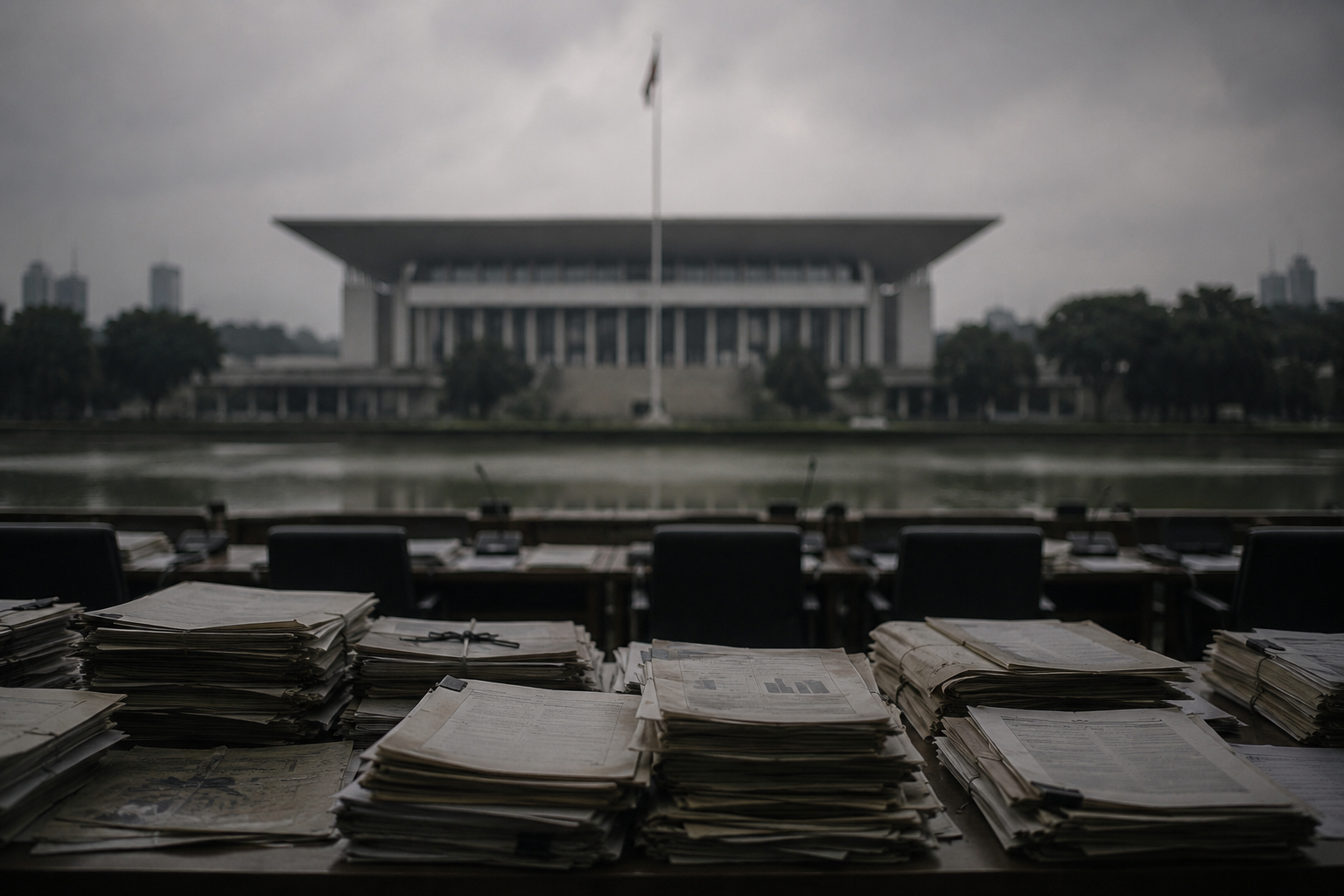
Carbon markets are not simply as ecological goals but they are essential political arrangements and negotiated through countless session of international negotiations. Year after year under United Nations framework meetings, countries deal with a complex balancing task about how states must reconcile climate ambition with economic survival (UNFCCC, 2015). On one side, some states that run on fossil fuels don’t want to shut down their economies overnight. On the other hand, there are countries already facing challenger, pushing hard for significant reduction in green house gas emissions. This is the point where carbon market transaction comes in. It’s the art of negotiated solution all parties strive to achieve when no one wants to give up too much or too fast. The trade of carbon credits gives countries the ability to show progress, even when they’re not actually cutting pollution right away. Developed countries are able to commit to zero net emissions, but they don’t have to tear apart their industrial sectors overnight. Meanwhile, developing countries can get funding for climate initiatives, without shouldering all the responsibility of fixing the problem (Global Market Insight, 2025). Honestly, what I see in this system is how keeps the negotiation from falling apart. Emission trading system facilitate agreements and these mechanism create opportunities for deals. Yet there’s a catch. This entire flexibility weakens the effect. Instead of focusing on real, rapid cut emission, climate ambition becomes framed around how creatively emission can be accounted for. Therefore, even though these deals seem like important moves ahead, what appears as multilateral progress may, in practice, represent the political management of delay.
State aren’t the only contributors affecting carbon markets, multinational corporations are deeply involved and play a significant role influencing the daily functioning of these systems. Large energy companies, financial institutions, and global consulting firms are deeply embedded in the design, verification, and trading of carbon credits. Take a look Shell corporation to understand how voluntary carbon markets actually work. In 2024, Shell retired close to 14.1 million voluntary carbon credits which largest corporate buyer that year (Carbon Market Watch, 2025). Most credits here came from environment initiatives, such as forest conservation or reforestation. Here’s how the whole thing turns out. First, Shell keeps doing what it has always done which is, extracts, processes, and supplies fossil fuels. The largest portion of emissions is third party emissions and arises when customers use that fuel. Instead of eliminating every one of those emission where they begin, Shell company buys carbon credits from approved initiatives that indicate they are either preventing or extracting the same level of CO₂ in a different location. When Shell retires those credits in official registries, it is then able to promote item such as “carbon-neutral” LNG cargoes or demonstrate progress on its net-zero objectives. We can see and learn how companies and government shape the rules and standards for whole market. For companies that rely on fossil fuels, voluntary carbon markets give them breathing room. They can keep producing oil and gas but still claim they’re working toward climate targets. The whole configuration illustrates how climate action has started to seem a lot like business. Carbon isn’t just an environmental issue anymore, it has become a commodity, dealt with and controlled alongside stock and bonds.
Carbon markets don’t just show corporation indirectly shape climate policy but more over expose longstanding disparities between developed and developing nations. The majority of global greenhouse gas emission were produced by industrialized nations. Even so, using carbon trading, there same countries are able to claim progress improvements in climate objectives by supporting projects financially in developing countries instead of lowering their own emission at home. This is how things generally operate. Developed countries buy carbon credits from things like renewable energy or forest conservation projects in developing regions. Definitely, this brings in investment and can help with sustainable development. But it raises challenging question with in if the majority of climate efforts takes place in less wealthy nations, in that case the emission heavy lifestyle and economic activities in wealthier regions can keep going almost without interruption.
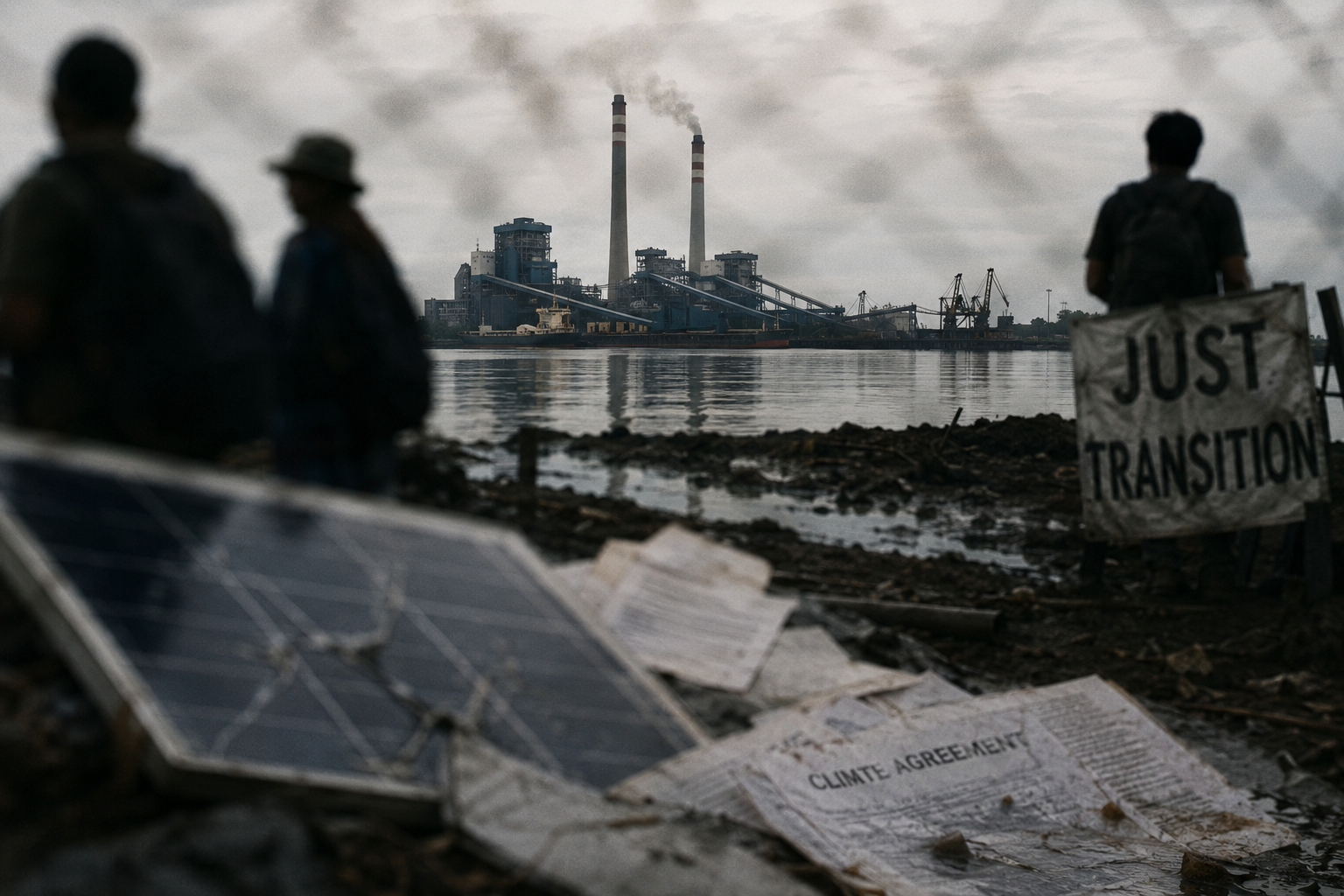
That separation poses a problem. Basically, emission keep coming from the same places while the efforts to offset them get pushed somewhere else. Developing countries end up serving as carbon storage areas, giving richer countries additional freedom to keep their industries running as usual (Climate Action Tracker, 2023). According to the data, emission decrease. However, in fact, the framework remain unbalanced. The gap between net zero on paper and in reality gets straight to the essence of the problems with today’s carbon markets. On the face of it, government records could indicate everything balancing but the atmosphere doesn’t care about accounting schemes. It only reacts to the total amount of greenhouse gases up there. As long as we keep pulling fossil fuels out of the ground, keep coal plants running, and stick with carbon heavy lifestyle, emission will stick around no matter what the spreadsheets say. This divide between the reported facts and the real situation in the air creates a real problem. “net zero” becomes just a formality within policy frameworks, but more often than not, it’s all about buying offset instead of making real changes. Instead of actually transforming the way we generate and consume energy, we end up just rearranging credits and moving money around. It isn’t the case that carbon markets are the opposition. In the end, the entire initiative depends on bridging this gap. If we keep letting the “net” part do all the heavy lifting and ignore the “zero”, climate policy just becomes a paperwork exercise. The main task is making sure there economic markets truly contribute to reducing emissions and not simply enhancing the data appearance.
Carbon markets aren’t bad, and they are not miraculous either. They’re just tools. What reality matters is how we set them up and make sure people play the agreements of the framework. When creating carbon markets and carbon trading system with affective monitoring, actual transparency, and tight limits on how many offset companies can use, they can channel money into climate action or climate initiatives where it’s cheapest and fastest. But if countries use carbon markets as a shortcut and just to avoid making though changes at home, they end up stalling the deeper shifts we actually need to hit climate targets. At the centre of it all constitutes is political will. Right now, climate policy is a complicated blend of urgency, money, and global power games. Carbon market help politicians make bolder promises as they create impression of feasibility. But just because something’s politically possible doesn’t mean it’s enough. If out only concern is making the number look good, without genuinely reducing emissions, then we could keep all parties involved while the planet keeps heating up. So the real question isn’t if carbon markets are good or bad. Moreover about the way countries are using it. If “net zero” turns into a numbers game instead of an authentic transformation of how we produce and use the energy, climate negotiation may give the impression of success on paper but won’t stop the crisis in the reality. At the end of the day, the atmosphere doesn’t care about out negotiations or agreements and a crafty calculation. It only respond to what we actually cut.
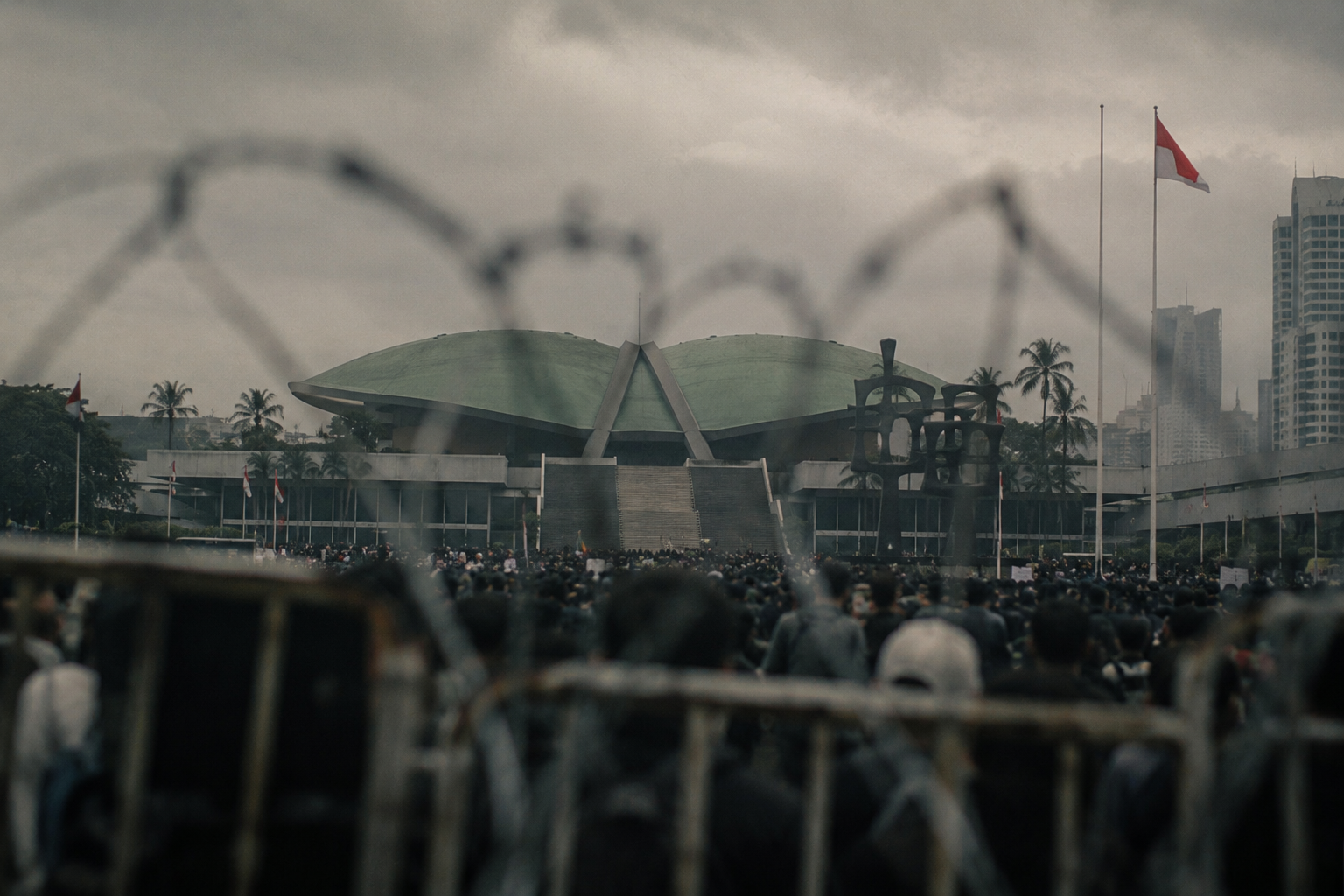
Let be honest, reducing our dependence on fossil energy sources isn’t easy. Most of the time, everything about modern life, no matter where you live, always runs on carbon-heavy system. The power grids, highway, big factories, even the way people work, all of it connect back to oil, gas, and coal. Trying to change so quickly is super risky, and it will be expensive in both economically and politically. That’s why carbon markets get so much attention. They promise a way to make the shift less painful, giving governments and businesses some breathing room while they figure things out. The problem is identical flexibility might ultimately delay progress. Offset credits happen quickly and honestly much less complicated than completely redesigning energy system or shutting down fossil fuel operations. The risk is, what supposed to be a short-term fix can easily become a continual deviation and allowing genuine emissions reduction to fade away. That is the place and community organization take action. Greenpeace, Walhi, JATAM, and all those activist. They consistently encourage leaders to move past than just shuffling numbers around. They want actual fossil fuel phase outs, educated people how we can save the earth and result that we can see not just by numbers. For them, net zero isn’t just some math problem, it’s a real shift in how society works. Their pressure matters. They remind everyone that indeed, changes is challenging but delaying action will cost us way more in the end. Whether it’s climate solution or merely a diplomatic illusion, either way, we’ve all got a part to play as changemakers. It’s on us to shift good intension to real action. As simple as carrying a refillable bottle in place of a single use plastic one, bring your own bag to the store, plant a tree , turn off lights you’re not using, or participate in a volunteer litter pick-up event. Little efforts build up fast swiftly. When we collaborate, we actually start to see the impact even in really small way.
Referensi
- Carbon Credits. (2025, March 10). Study finds carbon offsets failing to deliver real climate impact. CarbonCredits.com. https://carboncredits.com/study-finds-carbon-offsets-failing-to-deliver-real-climate impact/
- Carbon Market Watch. (2025, February 12). Behind the green curtain: Big oil and the voluntary carbon market. https://carbonmarketwatch.org/2025/02/12/behind-the-green-curtain-big-oil-and-the-voluntary carbon-market/
- Climate Action Tracker. (2023). Net assessment. https://climateactiontracker.org
- Global Market Insights. (2025). Carbon credit market size, global report 2026–2035. Global Market Insights. https://www.gminsights.com/industry-analysis/carbon-credit-market
- Integrity Council for the Voluntary Carbon Market. (2023). Core carbon principles and assessment framework. https://icvcm.org
- Intergovernmental Panel on Climate Change. (2023). Climate change 2023: Synthesis report. IPCC. https://www.ipcc.ch/report/ar6/syr/
- International Energy Agency. (2023). Emissions in 2023: Global CO₂ emissions analysis. IEA. https://www.iea.org
- International Institute for Sustainable Development. (2024). Article 6 and carbon markets after COP28. IISD. https://www.iisd.org
- Nature Communications. (2025). The negligible role of carbon offsetting in corporate climate strategies. https://www.nature.com/articles/s41467-025-62970-w
- Net Zero Climate. (n.d.). What is net zero? https://netzeroclimate.org/what-is-net-zero-2/
- Shell. (2025, December 23). Shell and carbon pricing. Global. https://www.shell.com/sustainability/advocacy-and-political-activity/carbon-pricing.html
- Shell. (2024). Shell sustainability report 2023 (PDF). Shell Global.
- United Nations Environment Programme. (2023). Emissions gap report 2023: Broken record Temperatures hit new highs, yet world UNEP. https://www.unep.org/resources/emissions-gap-report-2023
- United Nations Framework Convention on Climate Change. (2015) Paris Agreement. https://unfccc.int/process-and-meetings/the-paris-agreement/the-paris-agreement emissions.
- United Nations Framework Convention on Climate Change. (2023). Article 6 implementation and cooperative approaches. https://unfccc.int/process-and-meetings/the-paris-agreement/article-6
- United Nations Framework Convention on Climate Change. (n.d.). Article 6 of the Paris Agreement. https://unfccc.int/process-and-meetings/the-paris-agreement/article6
- World Bank. (2023). State and trends of carbon pricing 2023. World Bank Group. https://www.worldbank.org
- World Economic Forum. (2025, April 2). The new renewable revolution: Why carbon dioxide removal will transform the carbon market. World Economic Forum.https://www.weforum.org/stories/2025/04/carbondioxide-removal-carbon-credits/